Saturday, May 21, 2022

Candyman

Movie Name:
Candyman
Year of Release: 2021
Director: Nia DaCosta
Starring: Yahya Abdul-Mateen II, Teyonah Parris, Nathan Stewart-Jarrett, Colman Domingo, Kyle Kaminsky, Vanessa Williams, Brian King, Miriam Moss, Rebecca Spence, Carl Clemons-Hopkins, Christiana Clark, Michael Hargrove, Rodney L Jones III, Heidi Grace Engerman, Tony Todd
Genre: Horror, Thriller
Score out of ten (whole numbers only): 6
Watch it on Amazon

Synopsis and Review:
Writer/director Nia DaCosta who first came to prominence with her debut "Little Woods" in 2018, has tackled a somewhat reimagining or sequel to what is a cult horror film of the 90s, namely Bernard Rose's "Candyman". The original "Candyman" itself is based on Clive Barker's short story, "The Forbidden", though this new version picks up nearly 30 years later after the events of that film. The area where the events took place has now become gentrified, and the story focuses on the life of an up and coming artist by the name of Anthony McCoy. He lives in a nice loft with his art gallery director girlfriend Brianna, and is needing of a jolt or spark to continue his work. They both hear the urban legend of the Candyman from Brianna's brother, and Anthony decides to investigate further. He goes to the area in which the incidents around this figure supposedly occurred and meets William Burke, who owns a local laundromat, and tells him the Candyman story. This story inspires him to create more artwork, but this attention to the figure starts bringing the actual Candyman back and as a result the number of dead bodies starts increasing. As Anthony investigates further on the story behind that mythical entity, he notices his own body is also starting to change (in fact since a bee sting he got while visiting the area where Candyman previously attacked). He learns from his own mother details about his childhood that suddenly put his own existence in a different light.
Bernard Rose's "Candyman" was an interesting take on this character, one that looked at the mythological aspect of "Candyman" through the eyes of Helen Lyle, a student researching urban legends, in particular and in this case, African American ones. It was a film that took somewhat of a light stab at illustrating some profoundly unbalanced social-economical aspects, particularly the distribution of wealth and how that manifested itself in the creation of housing projects where people had been pushed out to, in many ways marginalized, this in the area of Chicago. Nia DaCosta's take on this is slightly different, since while depicting the same environment, the reality is now very different. For starters, there's an overwhelming gentrification which has occurred in the area, essentially converting these once segregated neighborhoods into a hotbed of hip clusters drawing young people in. And this is where she places the hero/anti-hero of this narrative. The director transforms "Candyman" into a quasi urban folk legend, one that has existed throughout the centuries, since slavery occurred and violence towards African American individuals in general has manifested itself. While not being an Avenging Angel or Supernatural Vigilante, "Candyman" is given a somewhat different stance on this sequel, which makes it more interesting and substantial. While this whole universe is richly layered, and the director peppers the film with beautifully rendered visual flourishes, the characters are sadly never more than thinly layered clichés. From Anthony himself, the hip artist trying to break through the elitist art scene, to the supporting characters, all of them are very roughly characterized which is where the film loses some of its impact. It would have benefited the narrative to understand a bit more about this central couple, what brought them and kept them together. The cast is uniformly solid, with Yahya Abdul-Mateen II making for a charismatic lead, with good support from Teyonah Parris, Nathan Stewart-Jarrett and Colman Domingo. The production team is also impeccable with the beautiful cinematography from John Guleserian, production design from Cara Brower and score from Robert Aiki Aubrey Lowe. While a bit unbalanced, there's much to enjoy from this take on this well known character from this director. 

Sunday, May 15, 2022

Senior Year

Movie Name:
Senior Year
Year of Release: 2022
Director: Alex Hardcastle
Starring: Rebel Wilson, Angourie Rice, Mary Holland, Molly Brown, Sam Richardson, Zaire Adams, Zoe Chao, Ana Yi Puig, Justin Hartley, Tyler Barnhardt, Jade Bender, Chris Parnell, Avantika, Joshua Colley, Jeremy Ray Taylor, Michael Cimino, Brandon Scott Jones, Tiffany Denise Hobbs
Genre: Comedy
Score out of ten (whole numbers only): 2
Watch it on Netflix

Synopsis and Review:
Another week, another film released by Netflix, this time around the feature directorial debut for Alex Hardcastle, who has a very extensive directorial career across a tremendous amount of shows, including "Grace and Frankie", "The Mindy Project", "Suburgatory", and "You're the Worst" (a large percentage of them being comedies). "Senior Year" initially takes place in 2002, focuses its narrative on Stephanie Conway, a senior high schooler originally from Australia. Not being particularly visible or popular, Stephanie focuses her energies on making that happen, at the expense of some of her closer friendships. As she manages to achieve the popularity and attention she craves, she also becomes a cheerleader captain, spicing up some serious rivalries, particularly from Tiffany, the previous leader. Following a sabotaged routine, Stephanie finds herself in a coma, one that lasts for 20 years. Upon waking up, Stephanie decides to go back to high school and finish what was her senior year. While initially against that idea, her best friend Martha, now the high school principal, finally caves in and agrees with the whole thing. Stephanie soon realizes that everyone has moved on, including her former boyfriend, now married to Tiffany, and living in the house she always wanted. Stephanie finds herself lost in this new complex web of relationships and activities in the high school, one where her ambitions of being Prom Queen no longer make much sense.
"Senior Year" is another Rebel Wilson vehicle, much like "Isn't it Romantic", only with meager laughs and entertainment value. The script from Andrew Knauer, Arthur Pielli and Brandon Scott Jones, tries to illustrate and also build a satire around the social niceties of going to school in this new era, where political correctness exists, where everyone lives on social media (and wants to be an influencer), and where the sense of fun is apparently completely eradicated. Stephanie is the anachronistic presence in this narrative, since for her the world is still 2002, and apparently then everyone was able to be lascivious and inappropriate. Sadly for all the attempts to capture this fish out of water aspect of the narrative, the laughs are null, and Rebel Wilson for all her likeability and charisma, can't do much for the character or for the film. It's a film that had the potential to be funnier (and even edgier), if the writers had chosen to do what Daniel Waters did with "Heathers" for instance, or even Tina Fey when she adapted the book from Rosalind Wiseman, in what became "Mean Girls". Instead it's a bland experience where nothing particularly relevant takes place, where most performances are forgettable, save for Zoe Chao's villainous turn, and where Rebel Wilson's presence is completely wasted. Avoid. 

Doctor Strange in the Multiverse of Madness

Movie Name:
Dr. Strange in the Multiverse of Madness
Year of Release: 2022
Director: Sam Raimi
Starring: Benedict Cumberbatch, Elizabeth Olsen, Benedict Wong, Chiwetel Ejiofor, Rachel McAdams, Xochitl Gomez, Michael Stuhlbarg, Hayley Atwell, Anson Mount, Lashana Lynch, John Krasinski, Patrick Stewart, Sheila Atim, Bruce Campbell, Charlize Theron
Genre: Action, Adventure
Score out of ten (whole numbers only): 6
View Trailer

Synopsis and Review:
Director Sam Raimi is back, after a considerable hiatus from directing features and focusing on his producing endeavors across multiple shows. After the somewhat disappointing "Oz the Great and Powerful", the director is back and once more working with Marvel after his successful experience in bringing the original "Spider Man" character to the big screen. This new adventure of Dr. Stranger takes place after the events from "Spider Man: No Way Home", where the characters became acquainted with the fact that there are multiple realities occurring simultaneously. Stephen is attending Christine's wedding, when he witnesses a teenage girl being attacked by a monstrous creature. Upon defeating it, he goes in search of answers, and seeks out the help of his friend, the avenger Wanda Maximoff. Much to his horror, he soon realizes Wanda is behind the attacks against the young girl, since she wants to capture her ability to move between realities. Wanda wants to be reunited with the children she conceived using her magic, but who live in parallel realities, and she will stop at nothing to achieve it. Influenced by a dark spell book, Wanda goes out on a rampage, with Stephen and America (the young girl she's pursuing), trying to escape her and possibly find a solution for the situation.
What has always been interesting about Sam Raimi's films, is how unlikely his heroes and central characters are. They're typically everyday individuals, who find themselves in extraordinary circumstances, where they challenged at every moment, and have to fight to overcome all sorts of obstacles, even within themselves. That's something that happened in the "Evil Dead" series, but also "Darkman" and even "Drag Me to Hell". This new adventure of Dr. Strange is slightly different, however some of the doubt and self questioning that Raimi's heroes possess, does present itself here as well. However and unlike most of his films, this one has a few too many formulaic aspects to go through, particularly during the first chapters where the exposition occurs, where the motivations for the narrative are expanded upon, and finally how the characters start interacting with each other (and their motivations are also fully exposed). Raimi's universe and point of view really do start popping up towards the third chapter, where some dark aspects of the narrative come to life, where the darkness of some characters are also clearly unleashed, which is not something very usual in a Marvel feature. However for all its visual flourishes (and they're many and they're truly wonderful), the characters still feel fairly unidimensional, even across multiple universes, and some of the cameos that pepper the film are borderline kitsch. It's a film where there seems to be a constant friction between Sam Raimi and his vision, versus Marvel and their formula. While the formula continues to be bland and somewhat repetitive, Sam Raimi manages to bring something different and engaging to the feature, even if it is briefly. The cast tries their best to bring these characters to life, but the big highlight goes to the production team, including the cinematography from John Mathieson, costume design from Graham Churchyard and score from Danny Elfman. Entertaining but not memorable. 

Saturday, May 14, 2022

The Ring Two

Movie Name:
The Ring Two
Year of Release: 2005
Director: Hideo Nakata
Starring: Naomi Watts, David Dorfman, Simon Baker, Sissy Spacek, Elizabeth Perkins, Gary Cole, Ryan Merriman, Emily VanCamp, James Lesure, Daveigh Chase, Kelly Stables, Kelly Overton, Michael Chieffo
Genre: Horror, Mystery
Score out of ten (whole numbers only): 5
Watch it on Amazon

Synopsis and Review:
After the immense and unexpected success of the first installment of "The Ring", Dreamworks quickly put a sequel in motion, recruiting for the director chair Hideo Nakata, the director of the original "Ring" and its sequel "Ring 2". The film, which takes place 6 months after the events of the original film, follows the events surrounding the life of Rachel Keller and Aidan her son, now living in Oregon. In the previous chapter of the series, Rachel after made a copy of the original tape, in order to save Aidan, and let it loose for someone else to see and distribute it. The killer videotape finds its way to their town of Astoria, and upon investigating the death of one of the teenagers victimized by it, Rachel is horrified to realize Samara has actually been focusing on finding her. She destroys what she thinks to be one of the remaining tapes, but Samara finds a way to inhabit Aidan's body, and slowly starts taking over his behaviors. Rachel realizes what is taking place, but is unable to protect Aidan, once he has to be taken to the hospital, and the doctors suspect of abuse. She sets on a journey of discovering Samara's birth parents, in order to hopefully finding out a way of saving Aidan and vanquishing Samara. 
This sequel from Hideo Nakata sadly suffers from having a script that is non-sensical and poorly developed. What made the original film so compelling, wasn't solely the fact that Samara was an entity seemingly unstoppable, but also the fact that the narrative centered around Rachel and Aidan, a woman who was not exactly the typical mother, and the young precocious boy with the ability to sense things out of the ordinary (modeled a bit after Haley Joel Osment's Cole character from "The Sixth Sense"). This sequel and its contrived script, fails to build much upon the relationship between these two characters, the same going for whatever intent Samara has for pursuing Rachel. Aside from the sheer lack of logic for what happens to and between the main characters and some of the events that are taking place, Hideo Nakata does manage to build tension throughout the narrative, and an atmosphere peppered with unease and potential menace. Though the film does feature some cleverly crafted sequences, the lack of character development for the leads and supporting characters, fails to bring much resonance to what is happening. The cast is what eventually makes this film watchable, with Naomi Watts making the most from her character, with good support from David Dorfman, Sissy Spacek, Simon Baker and Elizabeth Perkins. The production team is solid, including the cinematography from Gabriel Beristain and the score from Henning Lohner and Martin Tillman, who leverage the theme from Hans Zimmer who scored the previous installment. While not a terrible film, it's simply not a very memorable one.

Saturday, May 7, 2022

L'Histoire d'Adèle H/The Story of Adele H

Movie Name: 
L'Histoire d'Adèle H/The Story of Adele H
Year of Release: 1975
Director: François Truffaut
Starring: Isabelle Adjani, Bruce Robinson, Sylvia Marriott, Joseph Blatchley, Ivry Gitlis, Louise Bourdet, Ruben Dorey, Roger Martin
Genre: Drama
Score out of ten (whole numbers only): 7
Watch it on Amazon

Synopsis and Review:
The celebrated François Truffaut followed his "La Nuit Américaine/Day for Night", with a more intimate and dramatic film, one detailing the sad saga of Victor Hugo's daughter, Adèle Hugo. The film follows the narrative of Adèle as she flees Europe in the pursuit of her loved one, Lieutenant Pinson, who is stationed in Halifax, Nova Scotia, towards the end of the 19th century. While Albert Pinson did court her while she was living with her family in Guernsey, since her father had been sent there into exile, she firstly denied his advances, since her father was also against the union. But her feelings grew more intensely and she soon finds herself following Albert, wanting him to desperately resume the relationship and propose. Adèle takes residence with a family in Halifax, and unsuccessfully tries for Albert to resume the relationship, including giving him money to pay off his gambling debts. All the while her father and the rest of the family are trying to get her to return, to no avail, since her all consuming obsession continues to be Albert. He eventually finds himself transferred to Barbados, and once again Adèle follows him, but her mental and physical capacity are at this point quite diminished.
Based on the true story of Adèle Hugo, this dramatic tale of obsessive love, in actuality hides the fact that she was later on diagnosed with schizophrenia (and spent the most part of the last 40 something years of her life in a mental institution, until passing away in 1915). The film chronicles her desperation and persistence in attaining the love of Albert, trying by all means to make him realize the depth of her feelings and how willing to brush her own self love aside for him and his attention she actually was. The narrative in particular focuses on her life in Halifax, where her attempts to capture Albert's attention only further alienate him. It's a tragic narrative, one that François Truffaut brings somewhat vividly to life, however without the feverish and intensity that Bruno Nuytten's captured in "Camille Claudel", another artist with a tragic life, also portrayed by Isabelle Adjani. The film anchors itself in the luminous performance from Isabelle Adjani who perfectly embodies Adèle, charting her rollercoaster of emotions, oscillating between love stricken bride to be, to delusional, to self humiliating, to embittered, always with a single and determined purpose. It's a magnetic and all consuming performance that gives the film its jolt of energy, since for the most part the supporting characters don't have quite as much dimension, including the object of her affection, Albert Pinson, portrayed rather blandly by Bruce Robinson. The production team is impeccable, featuring the beautiful cinematography from the late Nestor Almendros and costume design by Jacqueline Guyot. A film always worth revisiting from an immensely talented film maker. 

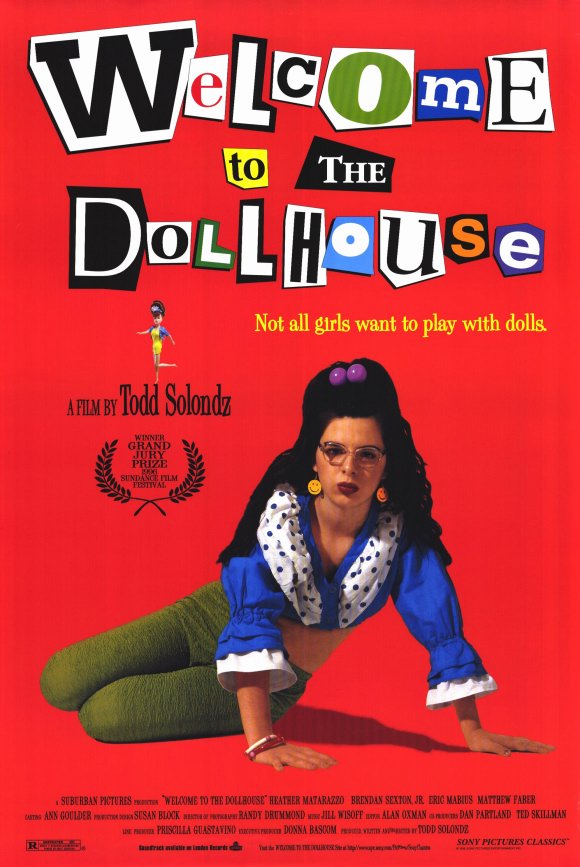
Welcome to the Dollhouse

Movie Name:
Welcome to the Dollhouse
Year of Release: 1995
Director: Todd Solondz
Starring: Heather Matarazzo, Brendan Sexton III, Eric Mabius, Matthew Faber, Angela Pietropinto, Bill Buell, Daria Kalinina, Will Lyman, Christina Vidal, Christina Brucato, Ken Leung
Genre: Comedy, Drama
Score out of ten (whole numbers only): 7
Watch it on Amazon

Synopsis and Review:
Director Todd Solondz established himself with this celebrated indie feature, which had its debut at the Sundance Film Festival of 1996, and went on to be featured on many lists of the best of 1996. The film focuses on the story of Dawn Wiener, a bullied twelve year old seventh-grader, who lives in a suburb of New Jersey with her family, who also make her life somewhat difficult. Her older brother Mark, whom she has troubles relating to, is focused solely on his band, while her younger sister Missy is spoiled and seemingly does nothing but dance around the house in a tutu. Her only friend is her neighbor Ralphy who is also bullied at school for being different. Dawn can't seem to avoid getting into trouble, be it at school where she is reprimanded for preventing one of her bullies of copying her answers on a test, or for accidentally hitting one of her teachers with a spitball during an assembly or at home, where she clashes with her sister Missy all the time. In the meantime Dawn develops a crush on Steve, a charismatic wannabe rock musician/high school senior who joins her brother's band, while at school one of her bullies suddenly also becomes a romantic interest. As Dawn navigates these romantic foibles, her home life suddenly takes a sharp turn when Missy, her sister, gets kidnapped (partially as a result of Dawn not telling her to get a ride home from her ballet teacher after her class). As her parents are nearing a nervous breakdown, Dawn decides to investigate Missy's location, going on an adventure in NY.
What has been one of the most interesting traits about Todd Solondz's work is the fact that he manages to illustrate life in the American suburbs with a mix of humor,  humanity and sometimes monstrosity. His characters are always more than just a simple cliché, particularly in his most accomplished films, including "Welcome to the Dollhouse" and "Happiness". In the case of "Dollhouse", Dawn is the perfect embodiment of the young girl seemingly out of place everywhere (a bit like Lisa Simpson), namely in school with her teachers and colleagues not fully realizing who she is, or the young woman she is becoming, the same going for her family life, where her parents are clearly more invested in their younger daughter, leaving both Mark and Dawn to their own devices. What's interesting about Solondz's point of view is the fact that he mines awkward moments for comedic gold, never de-humanizing his characters in the process (the way he for instance captures the family dinners in both "Dollhouse" and also in "Happiness"). While Dawn is neglected by her seemingly out of touch parents, they're still not completely portrayed as monstrous, since Solondz gives them an opportunity at redemption through the love and interest/obsession they hold for their younger offspring. It's a film that mixes some interesting dramatic points, some that are superficially touched upon, but one that doesn't shy away from illustrating the messiness, awkwardness and humor from every day life and in particular, of conflicting teenage years. The cast is solid with Heather Matarazzo creating a memorable central performance, with apt support from Eric Mabius, Matthew Faber and Will Lyman. A good film always worth revisiting. 

Sunday, May 1, 2022

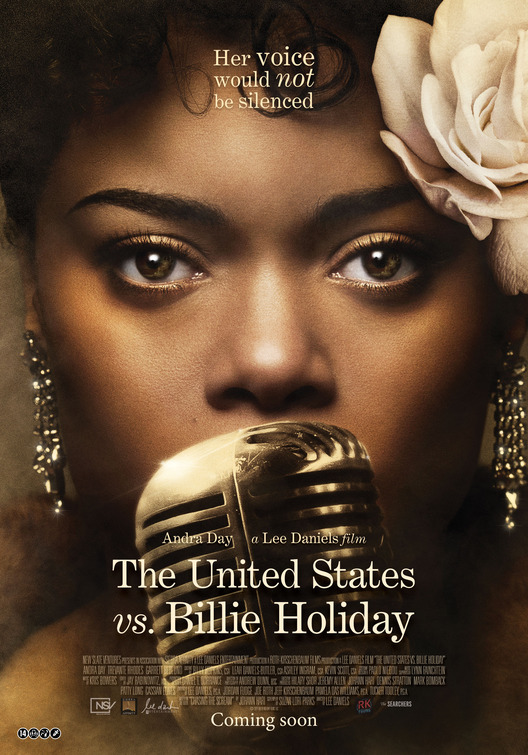
The United States vs. Billie Holliday

Movie Name:
The United States vs. Billie Holiday
Year of Release: 2021
Director: Lee Daniels
Starring: Andra Day, Trevante Rhodes, Garrett Hedlund, Natasha Lyonne, Leslie Jordan, Miss Lawrence, Dusan Dukic, Erik LaRay Harvey, Kate MacLellan, Da'Vine Joy Randolph, Kwasi Songui, Adriane Lenox, Letitia Brookes, Tyler James Williams, Jeff Corbett
Genre: Drama
Score out of ten (whole numbers only): 3
View Trailer

Synopsis and Review:
"The United States vs. Billie Holiday" is another interpretation on the life of singer Billie Holiday, with one of the most iconic ones being "Lady Sings the Blues", the 1972 film directed by Sidney J. Furie, with a central performance by Diana Ross. This time around the film focuses on Holiday's career around 1947, when people close to Holiday are trying to get her to cut the song Strange Fruit from her set list. The FBI considers her a threat, and is intent on stopping her focusing on her issues with substance abuse. An undercover FBI agent by the name of Jimmy Fletcher witnesses her doing drugs, and she gets arrested for drug use and possession. After being released, Holiday manages to do some shows, and eventually embarks on a relationship with Fletcher, even though most of her previous relationships have always been met with abuse and violence (and peppered with drugs). While initially suspicious of him, she opens up and falls in love. However she eventually sabotages the relationship and decides to go back to NY. She embarks on another relationship but is eventually reunited with Fletcher, at the same time some health issues flare up.
Lee Daniels of course made a name for himself with the drama "Precious" which premiered in 2009 to an array of accolades and good reviews. While his subsequent films haven't been met with such praise, he was able to be immensely successful with the show "Empire" which lasted for 6 seasons, the last one having just ended in 2020. The life of charismatic singer Billie Holiday is one that is ripe for a powerful drama, since she experienced such hardship and tribulations, on top of being such a phenomenal (and successful) talent. However this film and Lee Daniels take on this subject matter is very akin to an R-rated biopic of the week, with very little being illustrated in terms of what propelled Ms. Holiday or for that matter, the supporting characters around her. As she and Jimmy Fletcher become entangled in a relationship, nothing much is ever clarified about who he is, what his motivations are, aside from the assignment he is given. As a character, much like many of the supporting ones populating this film, he and all of this library of eclectic supporting players, are all very unidimensional, serving the purpose alone of providing some color for whatever Holiday is going through. Many stereotypes waltz through this film, including the supportingly eclectic jazz players, the villainous law enforcement authorities, the treatment of drug addiction, to name but a few. If indeed the point to this story was to humanize the trials and tribulations of such a talented woman, why not focus on her relationships, and how they were impacted by all these events, allowing for those characters and her in particular to be fully brought to life. As it is, it never really gives notion of the impact of her talent, nor the relationships she carved out, or even the hardships she had go to through. The cast tries its best to bring these characters to life, but Trevante Rhodes manages to be the most memorable performer, since with as little as he has to work with, he actually creates a sense of journey with his character, with his progressive fascination with what he witnesses and how he finally falls in love with Billie Holiday. The cinematography from Andrew Dunn is stellar as is the costume design from Paolo Nieddu. A missed opportunity. 

8 MM

Movie Name:
8MM
Year of Release: 1999
Director: Joel Schumacher
Starring: Nicolas Cage, Joaquin Phoenix, James Gandolfini, Catherine Keener, Peter Stormare, Anthony Heald, Chris Bauer, Amy Morton, Myra Carter, Jack Betts
Genre: Drama
Score out of ten (whole numbers only): 3
Watch it on Amazon

Synopsis and Review:
After the critical and commercial debacle of "Batman and Robin", director Joel Schumacher had a busy year in 1999, with two films premiering, again to mixed accolades. "8MM" premiered in February of 99 at the Berlin Film Festival and "Flawless", featuring Robert De Niro and Philip Seymour Hoffman had its debut in November of the same year. "8MM" saw the director working with screenwriter Andrew Kevin Walker who at the time had made a name for himself writing David Fincher's "Seven" and Brett Leonard's "Hideaway" (an adaptation of Dean Koontz's novel). The film follows the story of Tom Welles, a private investigator whose cases have always been rather straightforward and not particularly challenging. He's called upon by the widower of a very rich man recently deceased, the frail Mrs. Carter, who explains to Tom that as she went through her late husband's items, particularly the ones hidden in a vault, she came into the possession of a film depicting what appears to be a mix of pornography and finally a young woman being killed. Mrs. Carter wants to know if the film is legitimate or some elaborate production. Tom takes the job with some reluctance, however as he starts trying to piece together who the victim is, he realizes more evidence may be in LA. Wanting to know more about the adult film world and its universe, and how potentially the young woman got dragged into it, he enlists the help of a young man by the name of Max California, who starts showing him around. The more Tom uncovers, the more he realizes that not all is what it seems, and as he and Max get closer to understanding what actually took place the riskier the situation gets for them as well.
"8MM" immediately brings to mind the work of Paul Schrader and William Friedkin. The first one because he dived into somewhat similar territory with the underrated "Hardcore", which premiered in 1979 and had a great central performance from George C. Scott. William Friedkin on the other hand, is the best person to tackle material such as this, since not only does he not shy away from shooting anti-heroes but he also populates his stories with a pessimism that touches upon everything. He also understands how the exposure of certain realities and universes have a profound impact on his characters, which was the case of the controversial "Cruising" or even the underrated "To Live and Die in LA", and to a lesser successful extent, "Jade". The main issue with "8MM" is not solely the fact that the film feels and looks very generic, a somewhat derivative and watered down version of the Nine Inch Nails & Mark Romanek's collaboration for the video "Closer", but also the third act of the film feels like a commercial concession to make the central hero both an avenger/vigilante, and also a father of the family who regains his heart and conscience. The material needed someone with more of a clearly defined point of view, since what ends up being illustrated are a series of vignettes and situations supposed to showcase the fringes of sexual behavior, all very topical and somewhat shallow, whereas the focus of the narrative, Tom Welles' exposure to this new universe, and what impact does that have in him, is never truly clearly demonstrated (at least until the third act of the film, and even then it's very glossy and cliché ridden). While the film is a detective story on finding out what happened to the woman in the snuff film, it should also have been an insightful journey into how much does this somewhat innocent and sheltered man is forever changed (or not) by what he witnesses and comes to realize. The film isn't particularly violent or particularly shocking - it is simply shallow in its observations and in its intentions. The cast is solid, with Nicolas Cage, Joaquin Phoenix, the late James Gandolfini, Peter Stormare, Catherine Keener, Chris Bauer and Anthony Heald all creating strong characters. The cinematography from Robert Elswit is solid, as is the score from Mychael Danna. Another case of mismatched material, this film isn't a very memorable one. 

Sunday, April 24, 2022

C'mon C'mon

Movie Name:
C'mon C'mon
Year of Release: 2021
Director: Mike Mills
Starring: Joaquin Phoenix, Woody Norman, Gaby Hoffmann, Scoot McNairy, Molly Webster, Jakoubie Young-White, Deborah Strang
Genre: Drama
Score out of ten (whole numbers only): 5
Watch it on Amazon

Synopsis and Review:
Writer/director Mike Mills follow up to the fantastic "20th Century Women" is again a story about families and the ties that unite them, but this time around with a slightly different perspective than his previous endeavors. The film follows the story of Johnny, a radio Journalist who is currently doing an ethnographic style type of project, going around the country interviewing children about their lives and their expectations for the future. He receives an unexpected call from his sister, whom he hasn't spoken with since the death of their mother, asking him for some help. Her husband is dealing with some mental health issues, and she needs to go to Oakland and try to find a way to help him. While doing so, she needs Johnny to take care of Jesse, her nine year old son. Johnny agrees and stays in LA with Jesse, however when Viv asks for more time, he asks her if he can take Jesse to NY. Soon Johnny has to resume his work, and he takes Jesse along, this time around to New Orleans. As uncle and nephew travel around the US and experience daily life together, the more they realize about their own ties, their family relationships, fears, and ultimately reflect on what life has unveiled for them.
What has always been surprising about Mike Mills' films is the way he finds to make his personal experiences and point of view, into something that is humane, and that translates across to so many of his audience's own experiences. Shared experiences is not a prerequisite to enjoy a film of course, but his finest work has a deft mechanism of touching you in unexpected ways, particularly because he creates characters and situations that feel authentic and rooted in something genuine (even if for instance his narratives take place in very specific times and locations). "C'mon C'mon" is the first of his features where the essence of the narrative feels contrived and somewhat artificially constructed around a very precocious nine year old, who strangely enough, feels more like an interpretation of what a nine year old says and does than an actual child. The film fails to materialize a character's point of view, since neither Jesse nor Johnny's really comes across that clearly. There's much to admire in this film, particularly the narrative of Johnny, how he deals with grief, and how his process of listening to others allows him to figure out his own issues, but the film doesn't probe any deeper, choosing instead to deal with the choppy relationship with Jesse. For the first time in all his films, it feels like this particular narrative doesn't really know what it wants to say, at times aiming to be a Spike Jonze exploration on love (without the humor), and at other times, trying to be slightly ethereal in a style that only Sofia Coppola manages to capture so well. While Joaquin Phoenix is always fantastic, he can't save this film, which at times just drags on, because once more it just doesn't know what it wants to say. Gaby Hoffmann provides great support as usual, and the production team is fantastic, particularly the stunning cinematography from Robbie Ryan. Ultimately, this simply isn't one of Mike Mills' best features. 

Saturday, April 16, 2022

Portrait de La Jeune Fille en Feu/Portrait of a Lady on Fire

Movie Name:
Portrait de La Jeune Fille en Feu/Portrait of a Lady on Fire
Year of Release: 2019
Director: Céline Sciamma
Starring: Noémie Merlant, Adèle Haenel, Luàna Bajrami, Valeria Golino
Genre: Drama
Score out of ten (whole numbers only): 8
Watch it on Amazon

Synopsis and Review:
Céline Sciamma made a name for herself with the films "Tomboy" and "Girlhood", but "Portrait of a Lady on Fire" has thus far been her most critically acclaimed feature to date. The film premiered at the Cannes Film Festival where it won the award for best screenplay, but went on to win numerous accolades and generally be acclaimed across various film festivals. The film which takes place in the 18th century, follows the story of Marianne, a painter who is commissioned to do a portrait of a young woman named Héloïse, to seal her proposed marriage to a man she has yet to meet (a Milanese nobleman). This commission is being done secretly by her mother, since the previous painter failed to complete his task, due to the fact that Héloïse isn't happy about the arrangement. Héloïse was previously living in a convent, and the arrangement was set in motion after her older sister died by suicide. Since Héloïse's mother doesn't want the same outcome for this painting, Marianne has to act as a hired companion of Héloïse, and draw her from memory. They soon forge a friendship, and Marianne eventually confesses her role and what she has done. Héloïse questions the finished portrait, and Marianne destroys it. After a confrontation with Héloïse's mother, she actually decides to pose for Marianne, and a timeline is decided for the completion of this new version of the painting. However as they go through the process of creating the painting, and their every day life, a complicity between these women emerges, which soon goes beyond friendship.
"Portrait of a Lady on Fire" is a film that manages to capture the blossoming of a relationship between two women in a way that feels tender, intimate and sincere. Both women progressively realize the intensity of their feelings, but also how their relationship has its own limitations and expiration date, due to the society in which they live. While the fantastic "Blue is the Warmest Color" illustrated the maturing of a young woman's identity, one that also included her own understanding of her sexuality, "Portrait..." never really poses the question if the relationship between these two women is sensical or not. These are two individuals, meeting at a specific time in their lives, where a shared intimacy organically evolves and blossoms, until it consumes them both. It is however a film where this blissful intimacy is married with the notion that their lives have to go in their own directions, that a sacrifice will have to be done, which of course only further crystalizes what they felt and experienced together. It's a beautifully rendered and acted film, one that has some dashes of influences from Bruno Nuytten's "Camille Claudel", without the brilliant intensity of Isabelle Adjani, but nonetheless equally impactful even if the characters could have benefited from some extra dimension to themselves. The cast is equally impeccable, with highlights going to Noémie Merlant, Adèle Haenel and Valeria Golino. The cinematography from Claire Mathon is naturalistic, but all the more intimate in the evenings in which the film takes place. A very good film worth watching. 

Hustlers

Movie Name:
Hustlers
Year of Release: 2019
Director: Lorene Scafaria
Starring: Constance Wu, Jennifer Lopez, Julia Stiles, Keke Palmer, Lili Reinhart, Lizzo, Cardi B, Mette Narrative, Wai Ching Ho, Trace Lysette, Mercedes Ruehl, Devin Ratray, Dov Davidoff, Frank Whalley, Jon Glaser, Madeline Brewer, Steven Boyer
Genre: Drama, Crime
Score out of ten (whole numbers only): 6
View Trailer

Synopsis and Review:
After the little seen "The Meddler" and the TV Movie "This is Heaven", writer/director Lorene Scafaria had the biggest hit of her career thus far with "Hustlers", co-starring Jennifer Lopez, who also produced the feature film. The film, which is based on an article published by the New York Magazine, follows the life of Dorothy, a woman who has had a difficult life since she was a child and her parents left her with her grandmother and went their own way. Dorothy is being interviewed for an article by a journalist who wants to know more about a hustle she and some of her friends did a few years back and how they almost got away with it. The narrative takes us back to 2007 when Dorothy was working in a strip club and going by the name of Destiny. While there, she becomes a protégée of the beautiful and iconic Ramona Vega. Her act gets better, and things continue to go well, till the recession hits them big time, and the clientele dries up. The dancers go their separate ways and in Dorothy/Destiny's case, she has a child, with a partner whom she soon separates from. As Dorothy/Destiny is forced to go back to dancing, she reconnects with Ramona, who now has a new hustle. This new hustle involves targeting rich men in bars. The women in their group pretend to drink with those individuals, while they secretly drug them, and while they're pretty much out, they max out their credit cards. The hustle proves to be quite successful, even if some accidents and fumbling occurs, that is until other strippers start doing the same. Ramona decides to take her group and do things her way, with a different group of women, until things turn sour, when they target a client who is not the typical Wall Street professional, and who reports the incident to the police.
"Hustlers" unlike other stripper related features such as Andrew Bergman's "Striptease" or even Paul Verhoeven's "Showgirls", goes for a more decidedly realistic approach when it comes to the depiction of the life of this group of women, who strip for a living. Lorene Scafaria illustrates this world very much like a family of women, who bond over the challenges they have in their lives, and how stripping is what they have to do in order to survive and make sure they can support their families (or just themselves). The film doesn't portray these characters as victims, but instead as women who resort to what they can in order to advance in life. While this camaraderie is well illustrated, the characters themselves are sadly not very developed beyond some superficial details, all of which fails to register much as character development. The focus ends up being the stripping and the situations these women find themselves at as a result of that particular job, and subsequently the hustle in which they get involved, which at times may be remindful of Steven Soderbergh's "Ocean's Eleven", however without the suaveness and playfulness of that film. It's a film where the narrative keeps deftly moving, even if it doesn't necessarily bring anything different in terms of point of view, though it does give Constance Wu and Jennifer Lopez opportunities to shine. The production team on the film is solid, with highlights going to cinematographer Todd Banhazl and production designer Jane Musky (who has also worked in such films as Jerry Zucker's "Ghost" and James Foley's "Glengarry Glen Ross"). Worth watching.


Sunday, April 10, 2022

Death on the Nile

Movie Name:
Death on the Nile
Year of Release: 2022
Director: Kenneth Branagh
Starring: Kenneth Branagh, Annette Bening, Russell Brand, Tom Bateman, Armie Hammer, Gal Gadot, Jennifer Saunders, Dawn French, Letitia Wright, Sophie Okonedo, Emma Mackey, Rose Leslie, Ali Fazal, Susannah Fielding, Adam Garcia, Michael Rouse, Rick Warden
Genre: Drama, Crime
Score out of ten (whole numbers only): 3
Watch it on HBO Max

Synopsis and Review:
Kenneth Branagh has been extra prolific these past few years, releasing 4 films since he first tackled the character of Hercule Poirot in 2017's "Murder on the Orient Express". Though the pandemic shuffled some of the release of his films, he has had very well received ones, including "Belfast" which recently won him an Academy Award for best Original Screenplay, and very poorly received ones, such as "Artemis Fowl" which is streaming exclusively on Disney Plus. "Death on the Nile" whose premiere got pushed a few times, is another adaptation from Agatha Christie's novel, and also a remake of the film which premiered in 1978, directed by John Guillermin, which at the time featured an equally impressive cast, fronted by Peter Ustinov with support from Bette Davis, Mia Farrow, Jon Finch, Olivia Hussey, Jane Birkin, Angela Lansbury, David Niven and George Kennedy. The film follows another case of Poirot, who this time around, finds himself in Egypt, where he encounters a friend and his mother, also traveling, but as guests of a surprise wedding that took place recently between Linnet, a rich heiress, and Simon Doyle, who was previously engaged to someone else, and who in the space of 6 weeks broke it off and is now married to Linnet. As a group of colorful guests celebrates the wedding, Simon's ex-fiancee makes her appearance, much to everyone's surprise. The group decides to board a cruise ship, in order to escape the attention of Simon's ex, though Linnet trusts Poirot that she does not trust any of her guests on the ship. When Linnet is murdered, everyone on the ship comes under suspicion, since all of them held a grudge towards her, or had a motivation to kill her. Poirot puts his detective skills to good use as he tries to understand what exactly happened during that drama filled evening.
These glossy, over produced films while trying to make a case for "adult minded storytelling", have come to represent somewhat hollow attempts at recapturing the prestige formula without much success. And that mostly happens because while Kenneth Branagh has a flair for the staging of the baroque and opulent, one only has to remember both his version of "Hamlet" and his comic book adaptation of "Thor", most of the characters who appear in both "Murder on the Orient Express" and now "Death on the Nile", are thinly categorized and described. And not even B-movie thinly categorized, or for that matter, TV movie categorized: they barely register at all, without much in terms of motivation, interactions or depth. They appear to be as inert and artificial as the visual effects that capture some version of what Egypt in the 1930s was like. And that's what ultimately becomes the downfall of these adaptations: while lush and impeccably crafted, these films fail to register actual characters with motivations, besides most of them just being by-standers. The acting is also a bit all over the place, with some performers always impressing, such as Annette Bening for instance, while others are painful to watch, such as Gal Gadot. Kenneth Branagh is clearly a talented film maker and actor, but this feature raises the question that he probably shouldn't be tackling material that he may not have much empathy with. This film once again demonstrates there's material for which he can't put that much of a spin on, besides illustrating matters with this dazzling array of great production design and cinematography, backed by various names of an eclectic cast, which sadly don't amount to creating an interesting film. Forgettable. 

Saturday, April 9, 2022

Mass

Movie Name:
Mass
Year of Release: 2021
Director: Fran Kranz
Starring: Jason Isaacs, Martha Plimpton, Ann Dowd, Reed Birney, Breeda Wool, Kagen Albright, Michelle N. Carter
Genre: Drama
Score out of ten (whole numbers only): 7
Watch it on Amazon

Synopsis and Review:
"Mass" is writer/director Fran Kranz's directorial debut. He has had a prolific acting career, but ventured into directorial waters with this film, which had its premiere at the Sundance Film Festival of 2021, before embarking on a series of Fall Film Festivals, until it was officially released in October of 2021. The film follows the story of two couples who meet in a Church antechamber to discuss what has happened to their children. Jay and Gail's son was one of many who was shot and killed by Richard and Linda's son, who went on a shooting spree in a high school, six years ago. Jay and Gail are trying to understand if there were any behavioral indications, that might have suggested/indicated what eventually took place. Linda and Richard recount the story of what they consider to be the most impactful changes in their son's life, but they themselves can't understand what motivated that brutal occurrence. These two couples whose lives are permanently damaged by that occurrence, are both trying to find a semblance of peace and potential healing.
"Mass" is a film that manages to be equal parts gripping and emotionally devastating, as it tackles the aftermath of a school shooting, and what happens with families who have to essentially rebuild themselves. This group of characters meet each other in somewhat different circumstances, since while one couple is trying to find a justification for the violence that occurred, and for the void that was left in their lives, the other couple is carrying the immense burden of also losing a child, while knowing how much pain their offspring has inflicted on others. It's a powerful narrative, that has some theatrical aspects to it, and some initial artificiality to the dialogue, but one that eventually finds its momentum and basks in the great dynamics between the central characters. Unlike Lynne Ramsay's superb "We Need to Talk About Kevin", where the characters are given extra dimension, by revealing more about the parents of Kevin, their existence, challenges as well as the consequences of his actions, "Mass" omits those aspects altogether. It chooses to focus on this particular cathartic session, where one couple aims to find closure and justification for what happened, and the other somehow looks for absolution while also attempting to shine some humanity and frailties on the monstrous portrait of their own child. This underdevelopment of the characters, is possibly where the film could have benefited of a more nuanced screenplay. It's nonetheless a film that lives from its talented group of actors, where all of them get a chance to shine and bring these characters to life, even if little aside from the horrifying event is ever disclosed. Ann Dowd in particular is fantastic, as she tries to empathize with the people she is talking to, when she clearly doesn't know herself how something as horrifying as that could have happened. Her pain and her bewilderment are gut wrenching. The cinematography from Ryan Jackson-Healy is solid, as is the score from Darren Morze. A solid directorial debut and a film worth watching. 

Saturday, April 2, 2022

Diane

Movie Name:
Diane
Year of Release: 2018
Director: Kent Jones
Starring: Mary Kay Place, Andrea Martin, Estelle Parsons, Jake Lacy, Deirdre O'Connell, Glynnis O'Connor, Joyce Van Patten, Kerry Flanagan, Phyllis Somerville, Celia Keenan-Bolger, Ray Iannicelli
Genre: Drama
Score out of ten (whole numbers only): 8
Watch it on Amazon

Synopsis and Review:
Director Kent Jones has made a name for himself as a movie critic, in parallel with having a varied career as a director of programming for Film Centers and Festivals, before embarking on a career as a documentary film maker. "Diane" is his feature directorial career, and focuses its narrative on Diane, a woman who lives in the Massachusetts area. We witness Diane continuously helping her circle of friends and family, never stopping, always making sure she's available and present for anyone who needs her. Her cousin who is in the hospital with terminal cancer, is one of the persons she visits and cares for frequently, the same going for her son, who is battling drug addiction. As Diane goes through her visits and her interactions, it also becomes clearer that the motivations for what she does are instilled from a need for redemption for actions she took when she was younger, which had a profound impact on the lives of those who were close to her. Her current close group of friends, manages to be her support system, even if some of them are also passing away. 
One of the most interesting aspects of "Diane" is the fact that the film doesn't impart judgement on its characters. It just matter of factly represents this slice of life of a woman, who when she was younger, made some decisions which altered the life of her family, something she regrets doing, and is always attempting to compensate for. This race of hers to help, care for and support, is in a way, a salvation path for her own soul, even if she ultimately always remains her own worst critic. Her relationship with her son, as difficult as it is, eventually comes to a point of stability, even if it's not necessarily as she envisioned. This is a film that allows for these characters to have interactions, to showcase their frailties, dreams and how they overcome life's challenges. There's no illustration of an instant recipe for life's meaning or a dazzling special epiphany which summarizes the narrative. This film focuses instead on the observation of how the choices people do in life, will at times haunt them forever, and how aging is in itself a distancing process for people, particularly at a time when they become all the more vulnerable. It's a wonderful tale, with terrific performances from the whole cast, in particular of Mary Kay Place, who makes Diane both someone you can empathize with, with a generous kind heart, all the while also having another aspect to her personality that slightly saltier and realistic. The cinematography from Wyatt Garfield is solid, as is the score from Jeremiah Bornfield. Worth watching. 

Spencer

Movie Name:
Spencer
Year of Release: 2021
Director: Pablo Larrain
Starring: Kristen Stewart, Sally Hawkins, Timothy Spall, Jack Nielen, Freddie Spry, Jack Farthing, Sean Harris, Stella Gonet, Richard Sammel, Elizabeth Berrington, Laura Benson
Genre: Drama
Score out of ten (whole numbers only): 6
View Trailer

Synopsis and Review:
Director Pablo Larrain continues his singular career of tackling narratives focused on tumultuous times in his central character's lives. After the well received "Jackie", which gave Natalie Portman one of her finest performances, he followed that endeavor with "Ema", which while critically well received, still flew under the radar. Since then he tackled the mini-series "Lisey's Story" with Julianne Moore, and then premiered "Spencer" at the Venice Film Festival of 2021, where the film was well received, before embarking on its festival circuit. The film which takes place on Christmas Eve of 1991, focuses its attention on the progressive disenchantment and meltdown that Diana, Princess of Wales is experiencing in her life. Her relationship with her husband has become strained, due to his affair with another woman, whereas everyone at the service of the Queen treats her as if she is a woman on a verge of a nervous breakdown, and unable to care for herself. She drives to the Queen's estate in Norfolk, and her behaviors, clothing, what she eats, where she sits and even what she says, are thoroughly scrutinized. While her children are also in attendance, Diana realizes that the property where she grew is nearby, which reawakens memories and feelings she had long brushed aside. Her only friend at the estate is her dresser Maggie, who encourages her to stay firm to who she is. While Diana struggles with the burden of people's expectations, the deceitfulness of her husband, and living in the public eye, she finds support and love in her children, whom she wants to protect above all.
Films and TV Shows about the British Royal Family are starting to become a staple of prestige productions, but also a topic that is borderline burned out (much like the constant adaptations of "Peter Pan" and "Robin Hood", please give it a rest). What has always been interesting about Pablo Larrain's take on iconic women, firstly with Ms. Jackie O and now with Ms. Diana Spencer, is the period which he chooses to focus on and also, the challenges these women are facing at that time. For "Jackie" the period coincided with the death of the President, and how her facade and persona had to somehow reveal the humanity of someone going through a traumatic and debilitating event such as that one in the public eye. With "Spencer", Larrain focuses his attention on the period where Diana Spencer realized the eminent dissolution of her marriage, and how her current life had been staged and artificially crafted for her to inhabit, in a way suppressing who she really was, once more, for the sake of the public eye. These are fascinating moments in time for these characters, ripe for good drama, which in this case is cleverly staged, even if it is almost too glacial to allow the characters to emote much. And though that is indeed the intention, to denounce Ms. Spencer's unshackling of this cold universe in which she was a prisoner, the film itself also feels prisoner of the environment that it creates (the film needs more of a jolt of the energy which keeps flowing through Kristen Stewart). And sadly, it's a story that has been told countless times, including Oliver Hirschbiegel's "Diana", featuring the superb Naomi Watts, and more recently the Netflix show, "The Crown", created by Peter Morgan. The film succeeds in crafting this environment, and also in providing a great canvas for Kristen Stewart to excel and bring her interpretation of Diana Spencer to life. It's a solid interpretation, one that brings the persona of the Princess of Wales to life, without excessively trying to be a copycat. She has great support from the always fantastic Sally Hawkins and Timothy Spall. While not as memorable and impactful as "Jackie", it is worth watching nonetheless.